
You picked the dress for how it looks across a table, and winter has other plans: a freezing walk from the car, wind that cuts through every layer you own, and a coat so bulky the outfit underneath might as well not exist. So you either freeze in the pretty thing or arrive swaddled and spend the night feeling like the outfit never happened. Neither is necessary. A winter date outfit is a system — hidden warmth below, a coat that works as part of the look, and a clean reveal when you get inside. This list builds that system piece by piece.
Friday Night Style
Warm on the Walk, Polished at the Table
Winter date outfits built as a system: hidden layers for the cold, a coat that belongs in the look, and footwear that survives the walk.
Key Takeaways
- Dress for two climates: the street outside and the heated room inside, with layers that separate cleanly between them.
- Put the warmth where nobody sees it: a thin thermal under the dress and fleece-lined tights do the heavy lifting.
- Treat the coat as the first outfit your date sees, not as packaging to apologize for.
- Choose footwear for the walk first — tread, a low stable heel, and a plan for changing shoes if you need one.
- Pick your outfit from the temperature band you will actually be in, not the one you wish for.
Table of Contents
- Start With Two Climates, Not One Outfit
- The Hidden Warmth Layer
- The Outfit List: Six Winter Date Formulas
- The Coat Is Part of the Look
- Footwear That Survives the Walk
- Arriving and De-Layering Without the Fuss
- Skin, Hair and the Cold Walk Home
- Our view
- Frequently Asked Questions
- Sources
- Recommended
Start With Two Climates, Not One Outfit
A winter date happens in two places. Outside: wind, cold air, and possibly ice underfoot, for the walk to the door and the walk back. Inside: a heated restaurant or bar where the temperature suits people who arrived by car in normal clothes. Most winter date outfits fail because they are built for only one of those places. The dress that is perfect at the table leaves you shivering on the sidewalk; the outfit warm enough for the sidewalk has you overheating through dinner.
The fix is to plan the outfit as layers with a planned separation point. Everything you wear should divide into what stays on all night and what comes off at the door — and the part that comes off should look intentional while it is on. That is the difference between this guide and our general guide to what to wear on a Friday night date, which builds the date outfit itself without the cold to solve, and our broader what to wear Friday night in winter piece, which dresses winter Fridays in general. Here, only the combination matters: a date, in winter, with a person across the table noticing how you look at both ends of the evening.
Wind is the variable most outfits ignore. The National Weather Service explains in its wind chill questions that wind strips the thin layer of warmed air from exposed skin, so the temperature your body experiences can sit far below the thermometer reading — which is why a calm cold evening and a windy one demand different outfits at the same number. Its wind chill safety guidance adds the practical rule: cover exposed skin and dress in layers you can adjust, because trapped air between layers is what insulates you. A date outfit follows the same physics; it just has to hide it better.
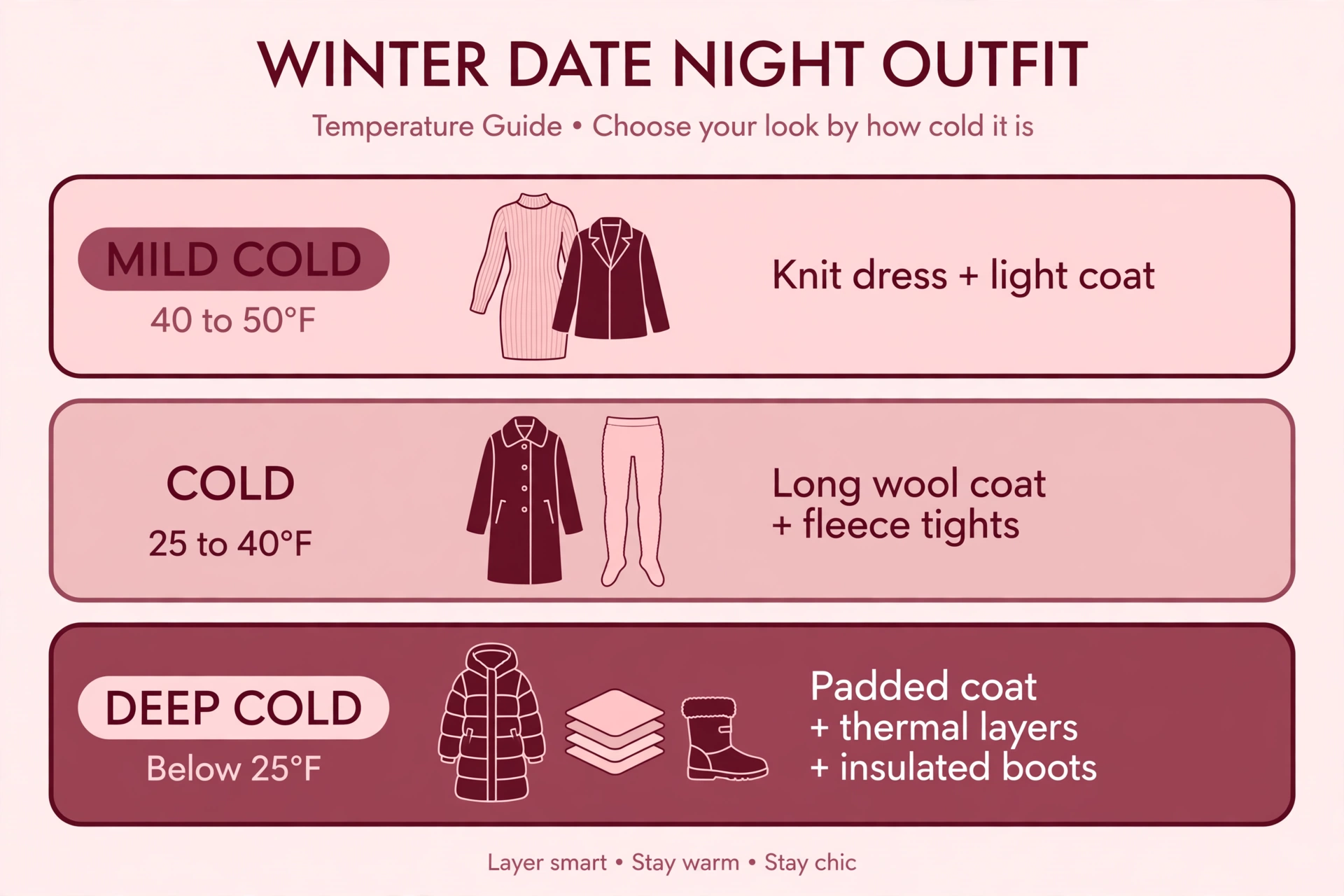
| Temperature band | Hidden warmth | Coat | Footwear plan |
|---|---|---|---|
| Mild cold, about 40 to 50°F | Regular opaque tights; a knit dress can carry its own warmth | A tailored wool or trench-style coat | Ankle boots with real tread |
| Cold, about 25 to 40°F | Fleece-lined tights plus a thin thermal top under the outfit | A long wool coat that covers most of the leg | Insulated boots for the walk; change at the door if the venue suits it |
| Deep cold, below about 25°F | Full thermal base top and bottom under a heavier outfit | Your warmest long coat, scarf and gloves as part of the look | Warm boots all night; choose an outfit that works with them |
Check the wind, not just the temperature
Before you choose, look at the evening forecast for wind as well as temperature. A still evening at freezing is a fleece-tights problem. A windy evening ten degrees warmer can feel colder on the walk and calls for the longer coat and covered neck. Build the habit into the same routine you use for what to wear Friday night in any season: the plan decides the outfit, and in winter the weather is part of the plan.
The Hidden Warmth Layer
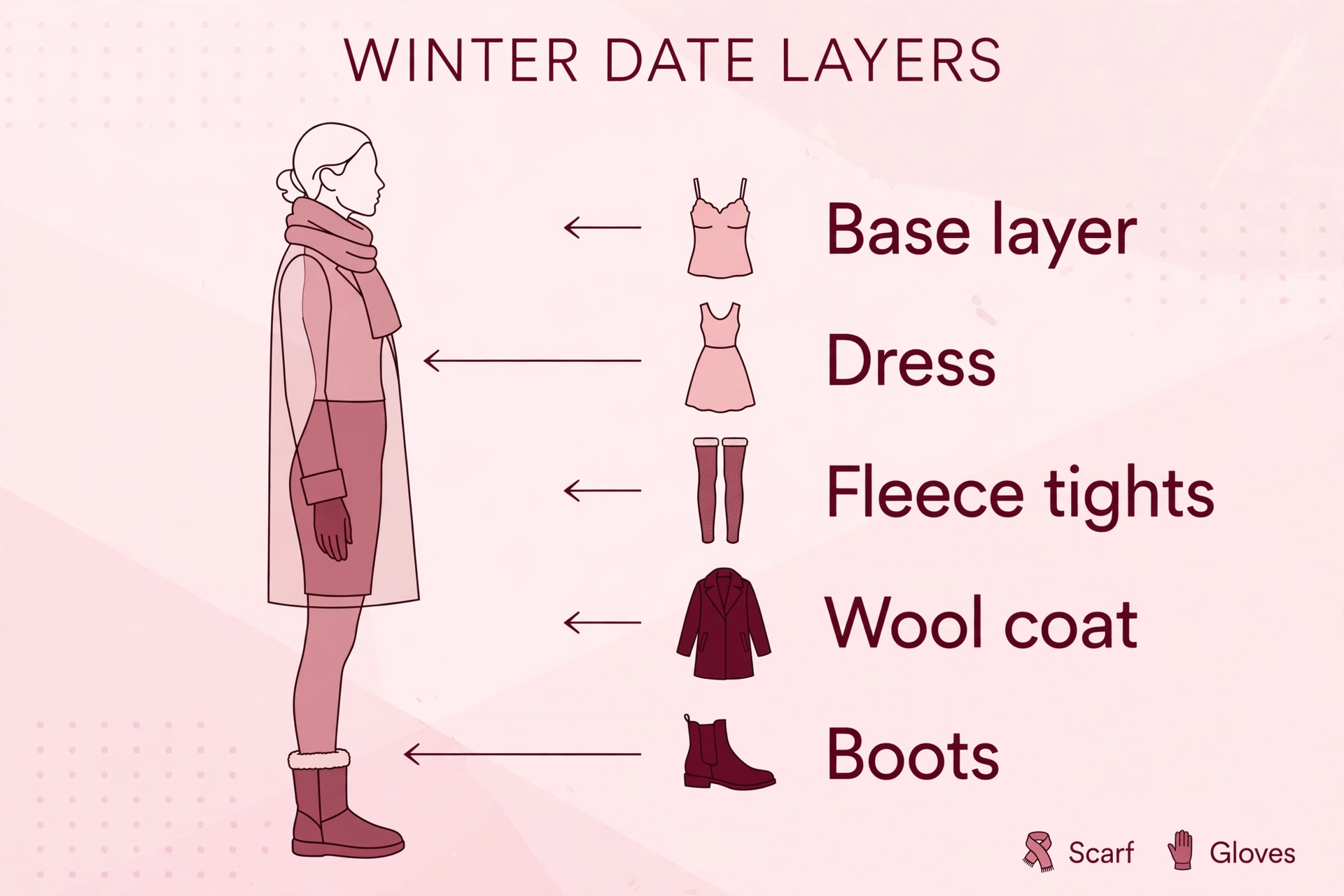
The secret of every good winter date outfit is that most of its warmth is invisible. Two pieces do nearly all of it: a thin base layer on top and fleece-lined tights below. Get those two right and the visible outfit can stay almost as light as it would be in spring.
Start with the base layer. REI’s guide to how to choose base layers sets out the material logic plainly: the layer against your skin exists to move moisture away and hold warmth, merino wool and synthetics both wick well, silk suits low-key activity, and the fit needs to be snug because a wicking fabric only works in contact with the skin. For a date, that translates to a thin merino or silk-blend thermal with a neckline that hides under your dress or top — deep scoop under a scoop neck, high crew under a knit. Cotton is the one fabric to keep out of this layer: MedlinePlus’s guidance on how to prevent frostbite and hypothermia warns never to wear cotton in cold weather because it absorbs moisture and holds it against the skin, making you colder — the opposite of what a base layer is for.
Below the waist, fleece-lined tights are the single highest-value swap in winter dressing. They read as ordinary sheer or opaque tights across a table and insulate like a trouser on the walk. The physics is the same one described in the textile explainer on the physics of warmth: warmth comes from still air trapped in a fiber structure, and a brushed fleece lining is essentially a thin layer of trapped air worn against the leg. If your outfit is trousers or jeans instead, a thin thermal legging underneath does the same job invisibly, a trick that pairs naturally with the builds in our friday night outfit with jeans guide.
Warm the gaps: neck, wrists, head
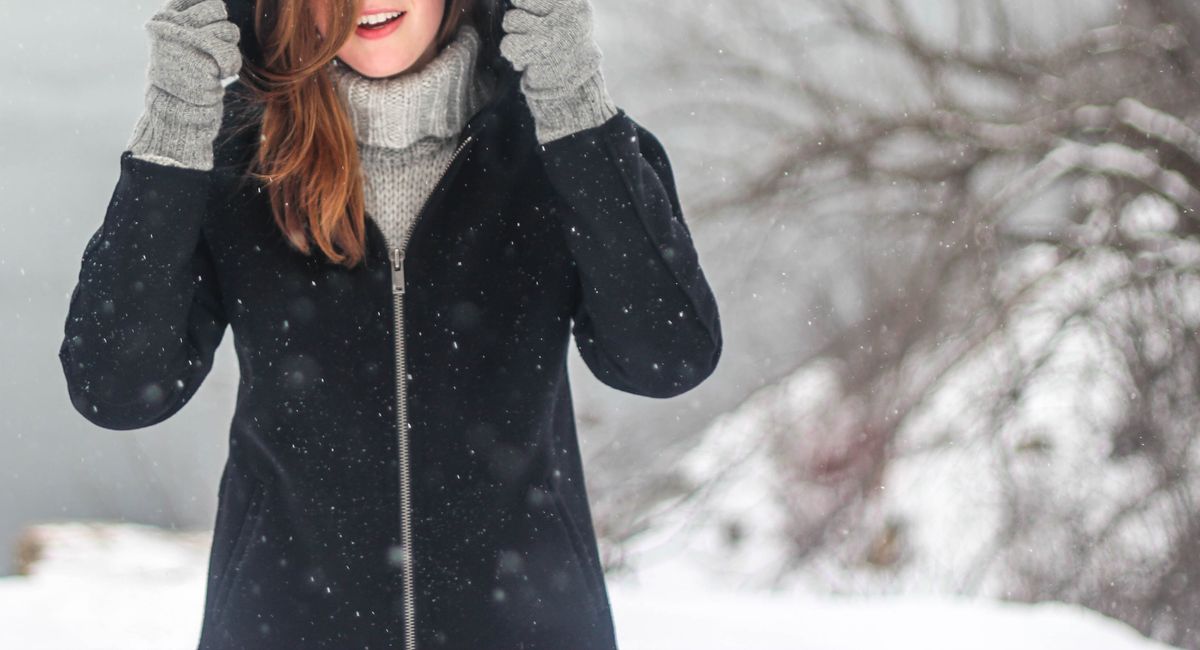
Heat escapes where the outfit has openings. The CDC’s page on preventing hypothermia lists the winter kit plainly — scarf, hat, gloves or mittens, a water-resistant coat and boots, and several layers — and its cold weather and travel guidance adds the rule that matters most on a date: stay dry, because wet clothing chills the body rapidly. On a date those pieces are not survival gear; they are the scarf that finishes the coat, the gloves that match the bag, and the hat you take off at the door and carry like you meant it. Choose them as accessories first and insulation second, and they will do both jobs.
The Outfit List: Six Winter Date Formulas
Each formula below solves the same equation — warm on the walk, right at the table — with a different visible outfit. Pick by the temperature band in the first section, then by the venue.
1. The long-sleeve knit dress
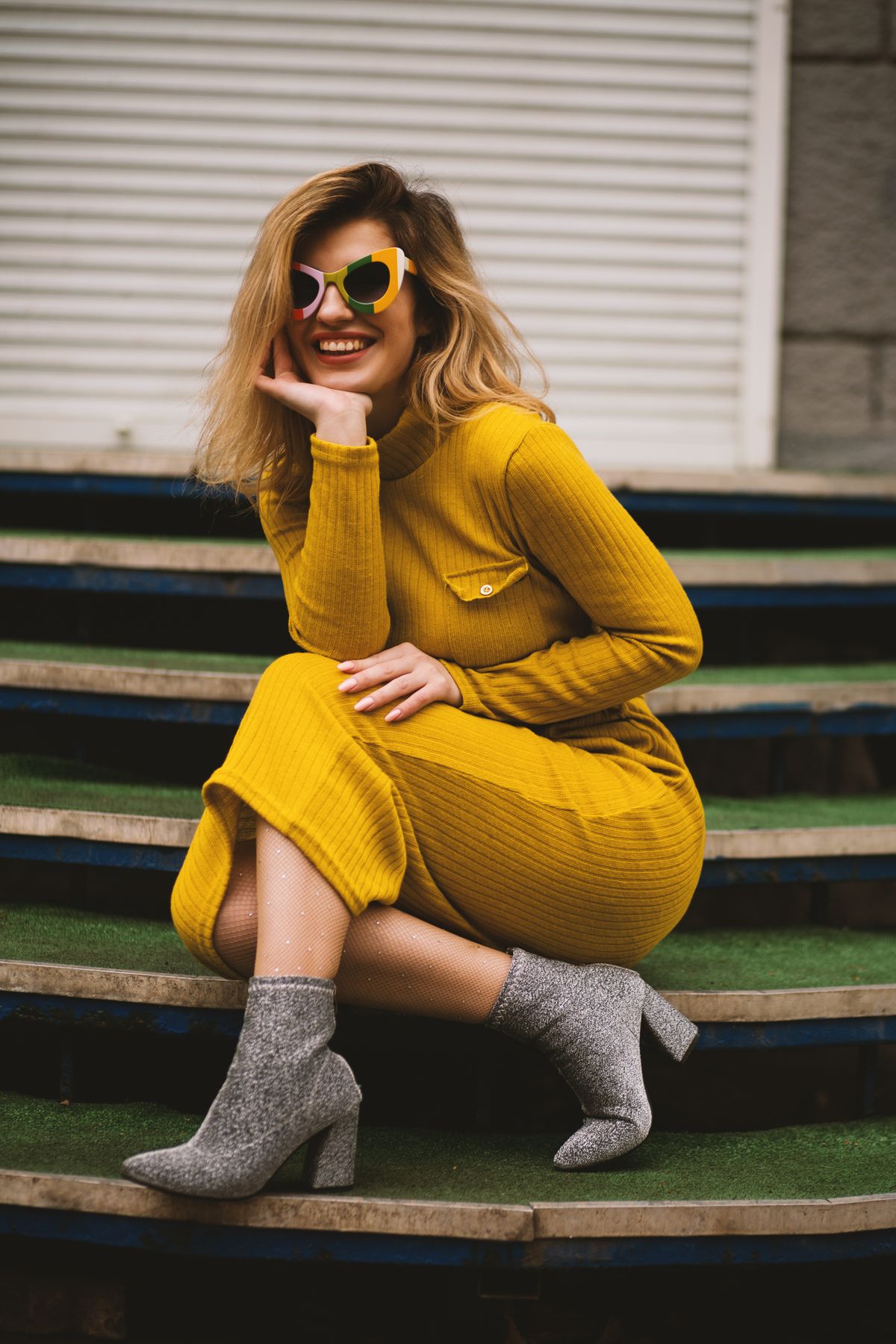
The easiest winter date outfit ever designed: the warmth is knitted into the dress itself. A fitted or wrap knit midi with long sleeves needs only fleece tights, ankle boots and a long coat over it. Choose a knit with some structure so it reads as a dress, not a sweater that wandered out. This is the mild-to-cold band’s default, and it borrows its layering logic from our friday night outfits for fall list, with the tights upgraded and the coat lengthened.
2. The slip dress, winterized
Yes, the slip dress works in winter — with engineering. Fleece tights below, a thin thermal with a neckline cut to hide below the slip’s, a fine knit or tailored blazer over the shoulders inside, and the long coat outside. The reveal at the table is a slip dress that looks untouched by the season; the walk was handled by layers nobody saw. If you are weighing how much the outfit should show once the coat is off, our explainer on how revealing a Friday night outfit should be settles that question separately from the temperature.
3. Wide-leg trousers and a fitted knit
For deep cold, trousers beat every dress. A high-waisted wide leg in wool or a heavy crepe, a fitted fine-knit top tucked in, a thermal legging hidden underneath, and boots under the hem. You get full leg coverage, a defined waist, and an outfit that never asks you to choose between warm and dressed. The proportions follow the same system as our friday night outfit formula: one fitted piece, one flowing piece, nothing competing.
4. The sweater dress with tall boots
A sweater dress plus knee-high or over-the-knee boots leaves only a small band of leg for the tights to cover, which makes it the warmest dress formula on this list. Belt it or choose a wrap shape so the knit has a waist. Tall boots also solve the footwear problem in the same purchase, which is why this formula is the deep-cold recommendation for anyone who wants a dress anyway. It adapts across ages exactly as written in our friday night outfits over 40 guide — warmth engineering has no age limit.

5. The jumpsuit under a long coat
A long-sleeve or sleeveless-with-blazer jumpsuit gives you trouser coverage with a one-piece ease, and a long coat completes the line. Check the torso fit seated before the night, and remember the bathroom logistics are genuinely harder in a jumpsuit plus layers — choose it for venues you know. For the fit questions that decide whether a close silhouette flatters, our guide to the best bodycon outfits for every body type covers the same ground for dresses.
6. Jeans, a silk top and a serious coat
For a casual venue — a wine bar, a pub dinner, a movie — dark jeans, a silk or satin top, a thermal camisole hidden underneath, and your best coat over everything is a complete winter date outfit. The coat and the top carry the polish; the jeans carry the comfort. It is also the most forgiving formula if the evening moves venues, because nothing in it is precious. If dinner is the whole plan, our guide to what to wear to a Friday night dinner helps you set the dress level before you add the winter layer.

The Coat Is Part of the Look
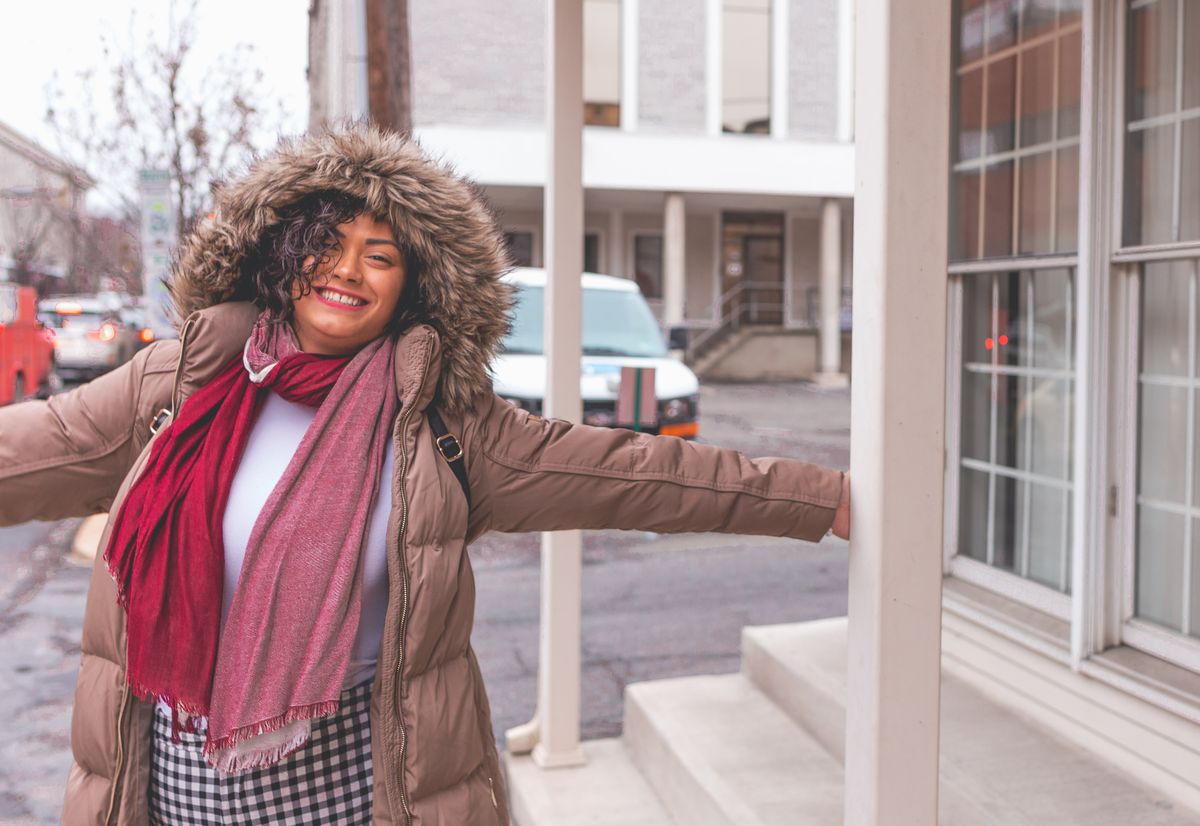
Here is the mindset shift that changes winter dating: your date sees the coat first. You walk in wearing it, you are greeted in it, and the outfit underneath is revealed second. Research on person perception makes the point formally — the paper arguing that dress is a fundamental component of first impressions notes that people read social identity, status and taste from clothing before anything is said — and a widely shared summary of the date-specific research, on how your fashion choices influence first impressions on a date, makes the same point about fit: a well-fitting outer layer reads as considered, a swamping one reads as an afterthought. The coat is not packaging. It is the opening line.
So choose it like an outfit piece. A long wool coat in a color that works with what is under it, long enough to cover most of the dress or meet the boots, with a scarf chosen rather than grabbed. Length is warmth as well as line: a coat that ends at the hip leaves the whole leg to the wind, while a coat to mid-calf turns the walk into a covered corridor. Our full guide on how to wear a trench coat covers the lighter end of this family; in deep winter the same principles apply to its heavier wool cousins. And if your best coat came from a rail of pre-loved wool, you are in good company — our case for why I always buy coats secondhand is built on exactly this garment.
Belt it, button it, finish it
A coat worn open and flapping reads as transit. A coat belted or buttoned, with the scarf arranged and the gloves on, reads as an arrival. Take the extra thirty seconds at the door — yours or the venue’s — to set the coat the way you want it seen. Then, when you take it off, the outfit underneath gets its own clean moment instead of emerging from a scramble.

Footwear That Survives the Walk
The most common winter date injury to an outfit is a shoe chosen for the table and destroyed — or dangerous — on the pavement. Ice changes the rules. OSHA’s winter weather guidance for walking on snow and ice is blunt: wear footwear with good traction and insulation, such as water-resistant boots with good rubber treads, and take short steps at a slower pace so you can react when traction changes. The National Council on Aging’s winter fall prevention tips adds the shoe-specific version: choose rubber soles that keep traction on slippery surfaces, and consider slip-on grip covers for the worst days.
Translated into date footwear, that means three honest options. First, the boot as the outfit: a sleek ankle or tall boot with a rubber tread sole and a low, stable heel is a finished date shoe in winter, full stop — pick formulas above that are built around it. Second, the two-shoe plan: real boots for the walk, your chosen shoes in a tote, changed at the door or in the lobby like it is the most normal thing in the world, because in winter it is. Third, for mild, dry, ice-free evenings only, a closed shoe with a textured sole — never a smooth leather sole, never a stiletto on a night with ice in the forecast. What not to do is the compromise that satisfies nobody: suffering prettily across a frozen car park in shoes that were only ever meant for carpet.
The walk is part of the date
If you are meeting there, the walk in is a solo problem and the plans above solve it. If you are walking together — between venues, or to the car — the footwear decision doubles in importance, because a slow, careful, gripping-your-arm walk in the wrong shoes is nobody’s idea of chemistry. Short steps and a slower pace are not just safety advice; they are how the walk stays a conversation instead of a rescue. Leave the extra minutes. Arriving unhurried and upright beats arriving on time and rattled, every time.
Arriving and De-Layering Without the Fuss
The arrival is a small piece of choreography, and it is worth rehearsing once in your head. Coat off first, scarf with it, gloves into the coat pocket so they leave together. If the venue has a coat check, use it without hesitation — handing over the whole winter apparatus in one move is the cleanest reveal there is, and it means the layers never drape over a chair or slide onto the floor. If there is no coat check, the back of your chair takes the coat, folded inward, and the scarf goes inside a sleeve so nothing trails.
Underneath, the outfit should need nothing. That is the test of the hidden layer: when the coat comes off, you should not have to adjust, retuck or apologize for anything. Check it at home before you leave — full outfit on, coat on, coat off, sit down. The thirty-second mirror version of the checks in our what to wear on a first date guide applies here with one winter addition: confirm the thermal neckline stays hidden when you sit and reach, not just when you stand. And if dinner itself is the risk — a rich meal in a fitted dress — the comfort engineering in our friday night outfits when bloated piece pairs with this one: choose the wrap or the forgiving waistband now, not after the first course.
Manage the indoor heat, too
Heated venues run warm, and a base layer that was perfect outside can be too much through a long dinner. This is why the thermal should be thin rather than heavy: it is insurance for a ten-minute walk, not a second sweater. If you run warm, choose the silk-weight base and let the coat and tights do more of the work. The layering principle is adjustable by design — the same add-or-remove logic as in our guide to how to layer outfits in fall, applied to a shorter, colder trip.
Skin, Hair and the Cold Walk Home
Cold air and indoor heating pull moisture from skin in both directions — dry wind outside, dry heat inside. Dermatologist guidance collected in the report on tips to protect skin in winter recommends moisturizer applied right after washing, creams over lotions, and keeping hands, feet and face protected from the cold when you are out. For a date, the practical version is small: moisturize before makeup, carry a lip balm in the bag and use it before you go in, and put the gloves on for the walk even if it is short — hands are the first thing the cold roughens, and they are on the table all evening.
Hair has its own winter problem: the hat. If the walk demands one, choose a looser knit you can put on without crushing the style, or skip the hat and let a hood or a high scarf arrangement cover your ears instead. A smooth style worn down survives a loose hat best; an elaborate updo and a tight beanie were never going to coexist. Decide which one the evening is for before you leave, not on the pavement.
Finally, plan the walk home with the same outfit, because it will be colder and later. The coat, scarf and gloves go back on in reverse order, and the two-shoe plan reverses too. The date outfit that only worked in one direction was only half planned. Build it round-trip, the way you would build any friday night outfit formula, and winter stops being the thing that ruins date dressing and becomes just another set of conditions the outfit was designed for.
Our view
A winter date outfit fails in the gaps: the walk nobody dressed for, the coat treated as an apology, the shoes chosen for a photograph instead of a pavement. None of those gaps needs money or a new wardrobe. They need the outfit planned as a round trip — hidden warmth underneath, a coat that earns its first impression, footwear that respects the ice, and a reveal at the door that was designed rather than improvised. Do that, and winter is not the enemy of date style. It is the season where the planning shows.
— Friday Night Style
Frequently Asked Questions
How do I stay warm in a dress on a winter date without looking bulky?
Put the warmth in the two invisible places: a thin merino or silk-blend thermal under the dress, with a neckline that hides, and fleece-lined tights that read as ordinary tights. Then let a long coat cover the walk. Bulk comes from thick visible layers; fitted hidden layers add almost none.
What shoes should I wear on a winter date if there is ice?
Boots with rubber tread soles and a low, stable heel are the finished answer, not a compromise. If your heart is set on other shoes, wear real boots for the walk and change at the venue. Smooth soles and stilettos on ice are how evenings end early.
Should my coat match my date outfit?
It should work with it, which is a lower bar: a long wool coat in a neutral or a deliberate contrast, belted or buttoned, with a chosen scarf. Your date sees the coat first, so it should look like a decision. Exact matching matters far less than fit and finish.
Are fleece-lined tights appropriate for a dressy date?
Yes. At table distance they read as standard opaque tights, and on the walk they insulate like a trouser. Choose a matte pair in black or a deep tone matched to the dress, with no visible branding or fleece texture at the waistband.
What if the restaurant is very warm inside?
Choose the thinnest base layer — silk-weight rather than midweight — and let the coat and tights carry more of the warmth. The base layer is insurance for a short walk, not a layer you should feel through a long dinner. If you run warm, you can also skip the top thermal and keep only the fleece tights.
How is a winter date outfit different from a normal winter Friday outfit?
The date adds two constraints: someone is looking closely, and there is a reveal moment when the coat comes off. A general winter outfit only has to be warm and good-looking as one fixed picture. A winter date outfit has to work as two pictures — the arrival in the coat, and the outfit underneath — with a clean transition between them.
Questions About Winter Date Outfits?
Tell us the plan, the dress code, and the part of the outfit that is not working — we read every message.
Sources
- National Weather Service — Wind Chill Questions
- National Weather Service — Wind Chill Safety
- CDC — Preventing Hypothermia
- CDC — Cold Weather and Travel
- MedlinePlus — How to Prevent Frostbite and Hypothermia
- REI — How to Choose Base Layers
- Selvane — The Physics of Warmth: How Fibers Trap Heat
- OSHA — Winter Weather
- National Council on Aging — Winter Fall Prevention Tips
- U.S. Pharmacist — Tips to Protect, Keep Skin Healthy During Winter Months
- ResearchGate — Dress Is a Fundamental Component of Person Perception
- FizzyMag — How Your Fashion Choices Can Influence First Impressions on a Date