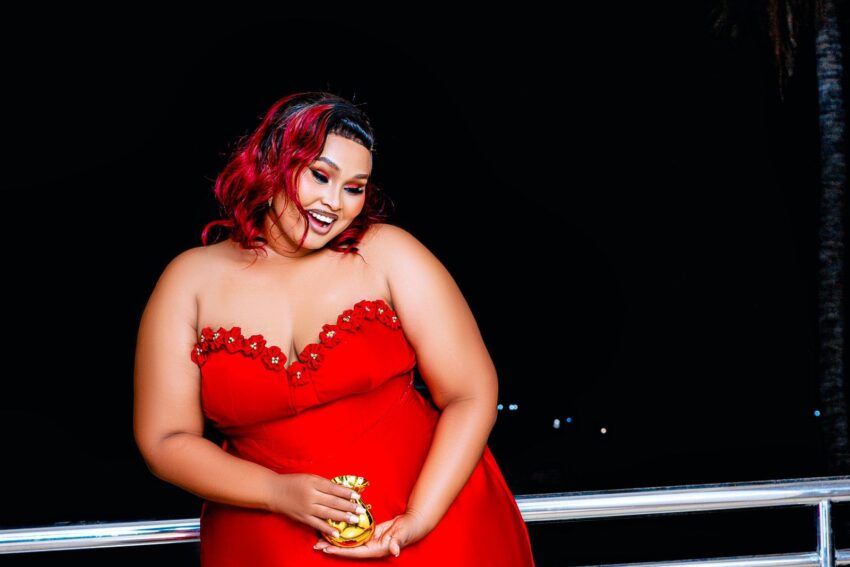
The dress is your size, the fabric is pretty, and it still does not work: the waist sits in the wrong place, the bust pulls, the skirt clings where it should skim. That is not a body problem. It is a fit engineering problem, and it has engineering solutions. These seven Friday night outfits for curvy women are built curves first, each one on a fit rule you can check in the fitting room: where the waist is defined, how the fabric is built, where the support lives, and where the print lands.
Friday Night Style
Built for Curves First. Styled for Friday Night.
Seven outfit formulas that start with fit engineering, waist, structure, support and print placement, and end with a look that stays comfortable all night.
Key Takeaways
- Fit comes before silhouette: a curvy outfit works when the waist, fabric, support and print are engineered for curves, not graded up from a smaller pattern.
- Define the waist at its narrowest point with a tie, a belt, a seam or a tuck, because that one line organizes everything above and below it.
- The most comfortable fabrics pair structure with stretch: enough body to hold a shape, enough give to sit, eat and dance in.
- Support is part of the outfit, not an afterthought: the right bra and a smooth foundation decide how necklines, slips and bodices actually sit.
- Print is a placement tool: scale it to the body and put the busiest part where you want the eye to go, not where it happens to land.
Table of Contents
- Start With Fit, Not With a Silhouette
- The Four Fit Rules Every Formula Uses
- Formula 1: The True Wrap Dress
- Formula 2: Satin Slip Dress With a Structured Layer
- Formula 3: Curve-Fit Jeans and a Statement Top
- Formula 4: The Belted Jumpsuit
- Formula 5: The Monochrome Column
- Formula 6: The Structured Bodice Dress
- Formula 7: The Smocked Top and Satin Skirt Set
- Our view
- Frequently Asked Questions
- Sources
- Recommended
Start With Fit, Not With a Silhouette
Most outfit advice for curvy women starts by sorting bodies into shapes and assigning each shape a silhouette. That order is backwards, and it is why the advice so often fails in the fitting room. Two women with the same shape can need completely different fixes, because the real variables are mechanical: the distance between bust, waist and hip, the rise of a trouser, the stretch in a fabric, the placement of a seam. Start with those variables and the silhouette mostly chooses itself. The formulas below are not seven dress shapes, they are seven constructions, each rebuildable in a different color, print or length without losing what makes it work.
The pattern problem sits underneath most fit frustration. Stitch Fix’s stylists explain in their plus size fashion tips that plus clothing is cut differently from straight sizes, with its own fit points at the shoulder, bust, waist and hip, and that a style built on separate fit standards behaves differently from a smaller pattern simply made bigger. Universal Standard builds its sizing system on the same insight: its sizing guide describes grading every style from a middle size outward, so the proportions hold across the range instead of drifting. When a garment feels wrong in three places at once, that drift is usually what you are feeling.
The practical habit that follows is to shop by measurements and fit notes, not by the number on the tag. ASOS lays out the working method in its guide to finding the right size: check the size the model wears against her height, read the product details for fit and fabric, and scan reviews from shoppers built like you. The table maps the complaints curvy women describe most often to the construction flaw behind them and the fix each formula uses.
| Fit complaint | Construction cause | Engineering fix |
|---|---|---|
| The waist disappears and the outfit looks boxy | No defined break between bust and hip; waist seam sits too low or nowhere | A tie, belt or seam placed at the natural waist (Formulas 1, 4 and 6) |
| Fabric clings in one place and sags in another | All stretch with no structure, or all structure with no stretch | Structured fabric with a stretch component, fitted where it supports and fluid where it moves (Formulas 2, 5 and 7) |
| Necklines gape, straps slip, bodices shift all night | Support treated as separate from the outfit; wrong bra for the neckline | Choose the foundation with the garment: band support, secure closures, built-in cups (Formulas 2 and 6) |
| A print makes one area look twice its size | Print scale and placement copied from a smaller sample size | Scale the motif to the body and place the busiest area deliberately (Formulas 1 and 7) |
Measure once, shop all night
Take three measurements before your next order: bust at the fullest point, waist at the natural crease when you bend slightly to one side, and hips at the fullest point, all over the under-layer you actually wear. Keep them in your phone. Every formula below assumes those numbers. If you are rebuilding your whole approach from the base up, our Friday night outfit formula gives the general base, focal point and finisher system that these curvy builds then specialize.
The Four Fit Rules Every Formula Uses
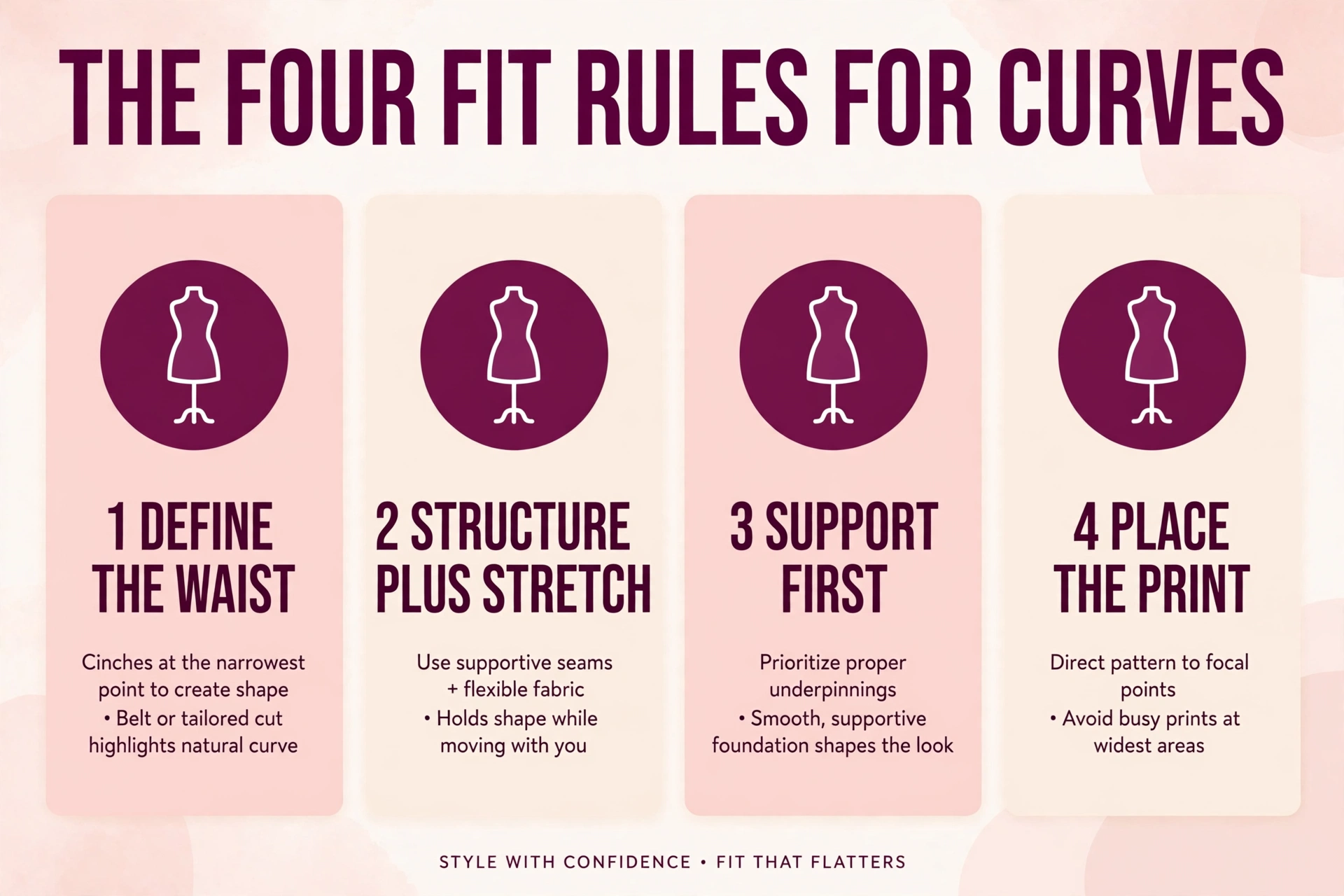
Each formula below is a different outfit, but all seven run on the same four rules. Learn the rules and you can audit anything already in your wardrobe. They also travel across body changes in a way fixed silhouettes do not: a waist tie adjusts, a smocked panel flexes, a belt moves a notch.
Rule 1: Define the waist where it actually is
The waist that matters is your natural waist, the narrowest point of the torso, which on a curvy body may sit higher than most waistbands expect. A definition placed there divides the outfit into the classic one-third, two-thirds balance: as The Curvy Fashionista explains in its guide to the rule of thirds, splitting a look into thirds rather than halves makes it read balanced and deliberate. The mechanism can be a wrap tie, a belt, a raised seam or a bodysuit top. What it cannot be is a low, loose waistband hoping for the best. The same thirds logic drives our builds for other proportions, from Friday night outfits for petite women to Friday night outfits for tall women.
Rule 2: Pair structure with stretch
Pure stretch clings to every contour and shows every under-layer line; pure structure stands away from the body and adds bulk. The curvy sweet spot is a fabric with a skeleton and a pulse: ponte, scuba, stretch crepe, denim with elastane, satin with a weighted drape. Nordstrom’s stylists make the fabric point central in their plus-size style guide, steering curvy shoppers toward pieces that skim and shape rather than squeeze or swamp. Test any fabric with three movements: sit down, reach up, twist. A good curvy fabric returns to its shape after all three.
Rule 3: Build support into the outfit
Support is a design decision made at the same time as the neckline, not a rescue mission afterwards. A wrap front needs a closure that holds; a slip dress needs straps wide enough for a real bra; a bodice needs cups and seams that carry weight. Foundation sizing matters as much as dress sizing, and SPANX publishes its size guide around the same principle used throughout this list: go by your measurements, and never size down in a foundation garment hoping for more effect, because an undersized layer rolls, digs and creates the very lines it was bought to smooth. Choose the foundation when you choose the outfit, and try them on together.
Rule 4: Place the print, scale the print
Print fails curvy outfits in two ways: a motif scaled for a smaller body, which reads as noise, and a busy placement that lands its largest, brightest element exactly at the widest point. The fixes are mechanical. Match motif size to body scale. Put the busiest part of the print where you want attention, usually the bodice or the hem, and let it calm down across the area you want to skim. On nights when your middle feels unpredictable, the drape-first builds in our list of Friday night outfits when you feel bloated use placement and ruching to do this job softly.
Formula 1: The True Wrap Dress
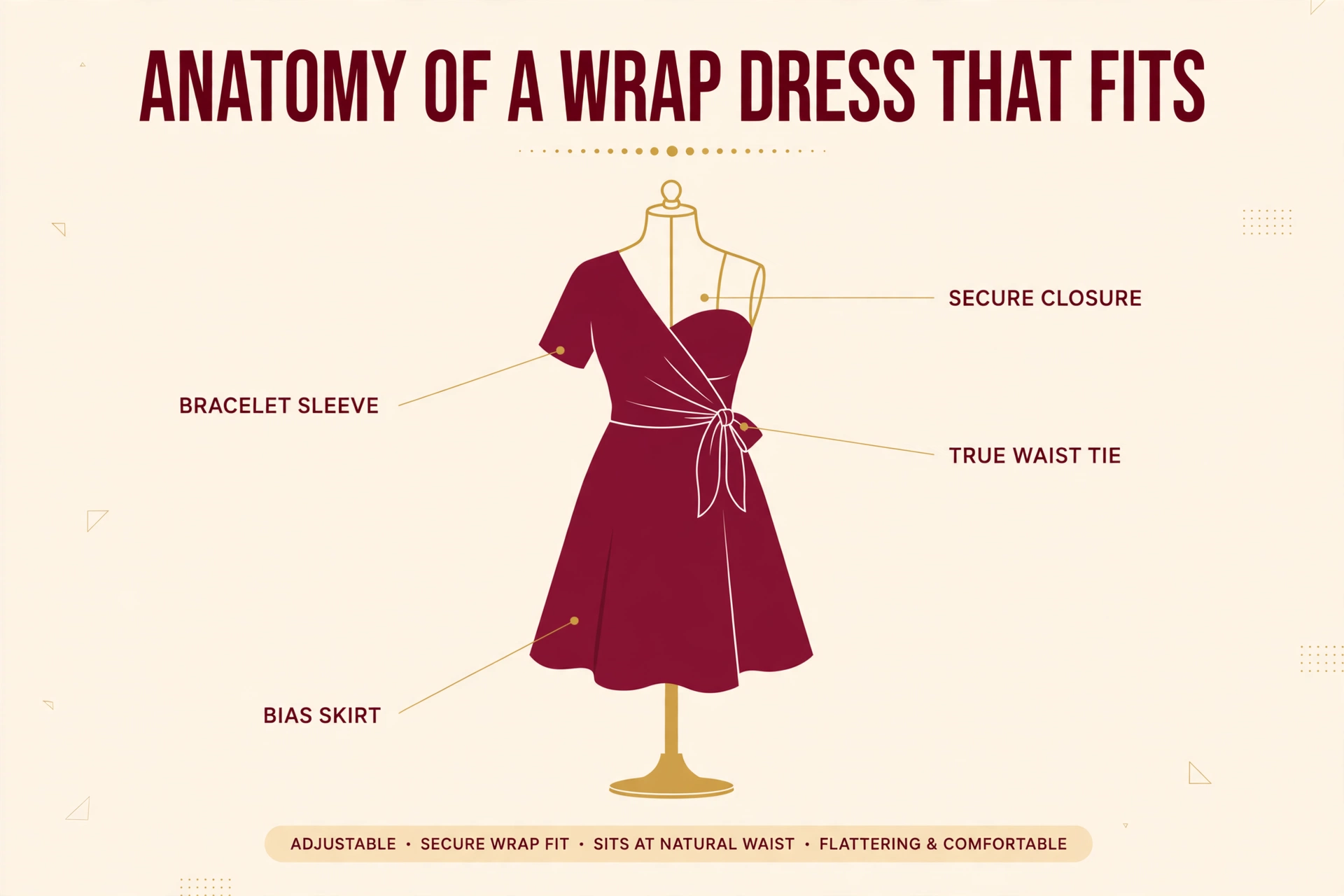
The fit rule: an adjustable waist beats a fixed waist. A true wrap dress is the original piece of fit engineering: the waist is wherever you tie it, the neckline depth is set by how you cross the front, and the skirt is cut on a flare that leaves the hip room to move. For a curvy body that changes across the month, that adjustability is the whole point. Look for a wrap that ties at the natural waist rather than under the bust, with a skirt that opens from the waist instead of clinging through the hip, and a front closure that keeps the crossover secure when you sit.
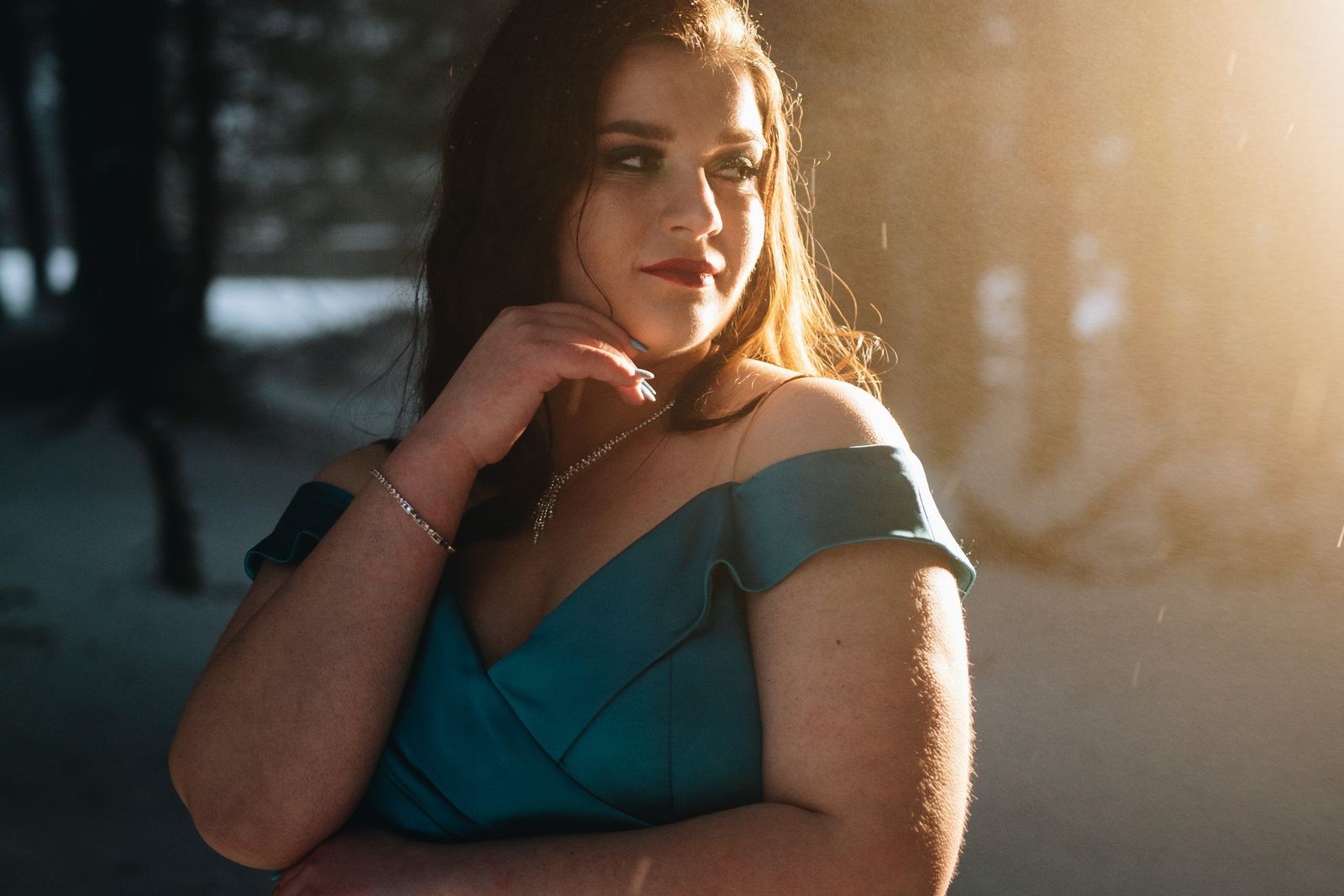
The details decide whether a wrap works or merely wraps. A bracelet or three-quarter sleeve balances the open neckline against a fuller skirt. A midi length lets the flare do its work without shortening the leg. In print, choose a motif scaled to you and denser at the bodice and hem than across the hip. The Curvy Fashionista’s roundup of date night outfit ideas returns to the wrap for exactly these mechanics, pairing it with rich jewel tones that hold their own in evening light. A wrap in emerald, wine or deep teal, with a heeled sandal, is the fastest complete answer on this list. If your Friday is a date, our guide to what to wear on a Friday night date shows how the same build shifts with venue.
The wrap checklist
Before you buy, run four checks. The tie should sit at your natural waist without you holding it there. The crossover should stay closed when you sit and lean forward. The skirt should release from the waist, not grip the hip. And the fabric should have enough weight to fall rather than float, because a flimsy wrap twists as you walk. A faux wrap can still work, but only if its fixed waist happens to be your point.
Formula 2: Satin Slip Dress With a Structured Layer
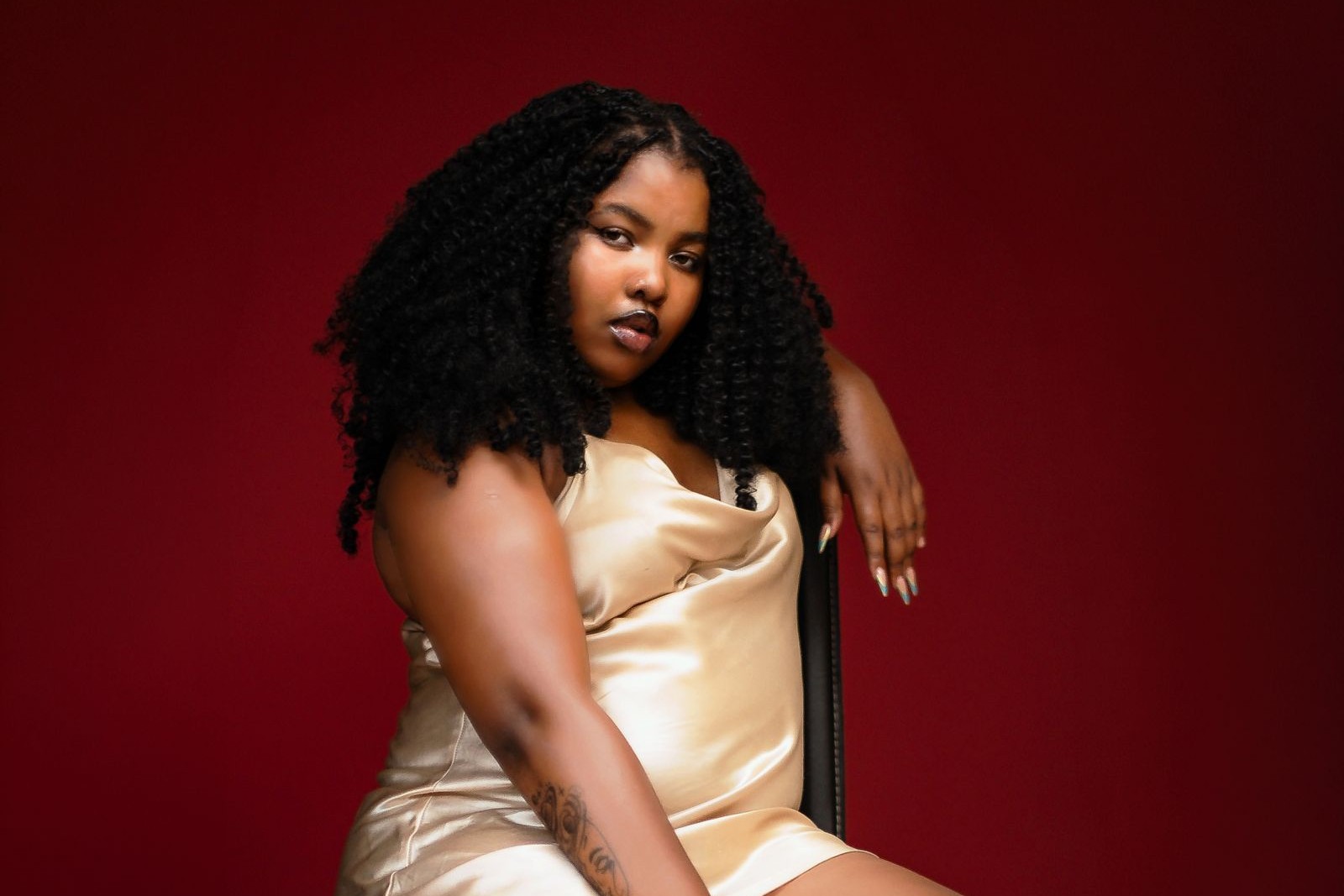
The fit rule: fluid fabric needs an architectural partner. The slip dress is cut on the bias, which is why it pours over curves so beautifully, and also why it shows every under-layer line and offers the bust no support. The engineering answer is not to avoid the slip; it is to give it structure from outside. A tailored blazer with a defined shoulder and a nipped waist, worn open, supplies the architecture the dress lacks: the shoulder line frames the top, the open front creates two lengthening verticals, and the blazer’s hem marks the waist the bias cut refuses to mark.
Underneath, solve the slip’s two known problems before you leave the house. First, support: pick the bra for the neckline, not the other way round. Lane Bryant’s Cacique bra fit guide works through the band-first logic that makes any of this possible: most support comes from a band that sits snug and level, with cups that contain without spilling, so a slip over the wrong band size will shift and gap no matter how good the dress is. Second, surface: satin shows every line beneath it, so the layer under it must be seamless. Texture contrast is the styling dividend, since a matte tailored jacket against liquid satin is the pairing stylists reach for when they mix textures in an outfit. The same soft-against-hard balance, pushed further, is the whole subject of our guide to how to mix soft and hard.
Fit points for the slip itself
Buy the slip for the hip and bust, not the waist: a bias skirt that pulls across the hip will twist as you walk, while a slightly generous one falls straight. The straps should be adjustable, because strap length sets where the neckline sits on a fuller bust. A midi that ends at the narrow part of the calf lengthens; one that ends at the widest part shortens.
Formula 3: Curve-Fit Jeans and a Statement Top
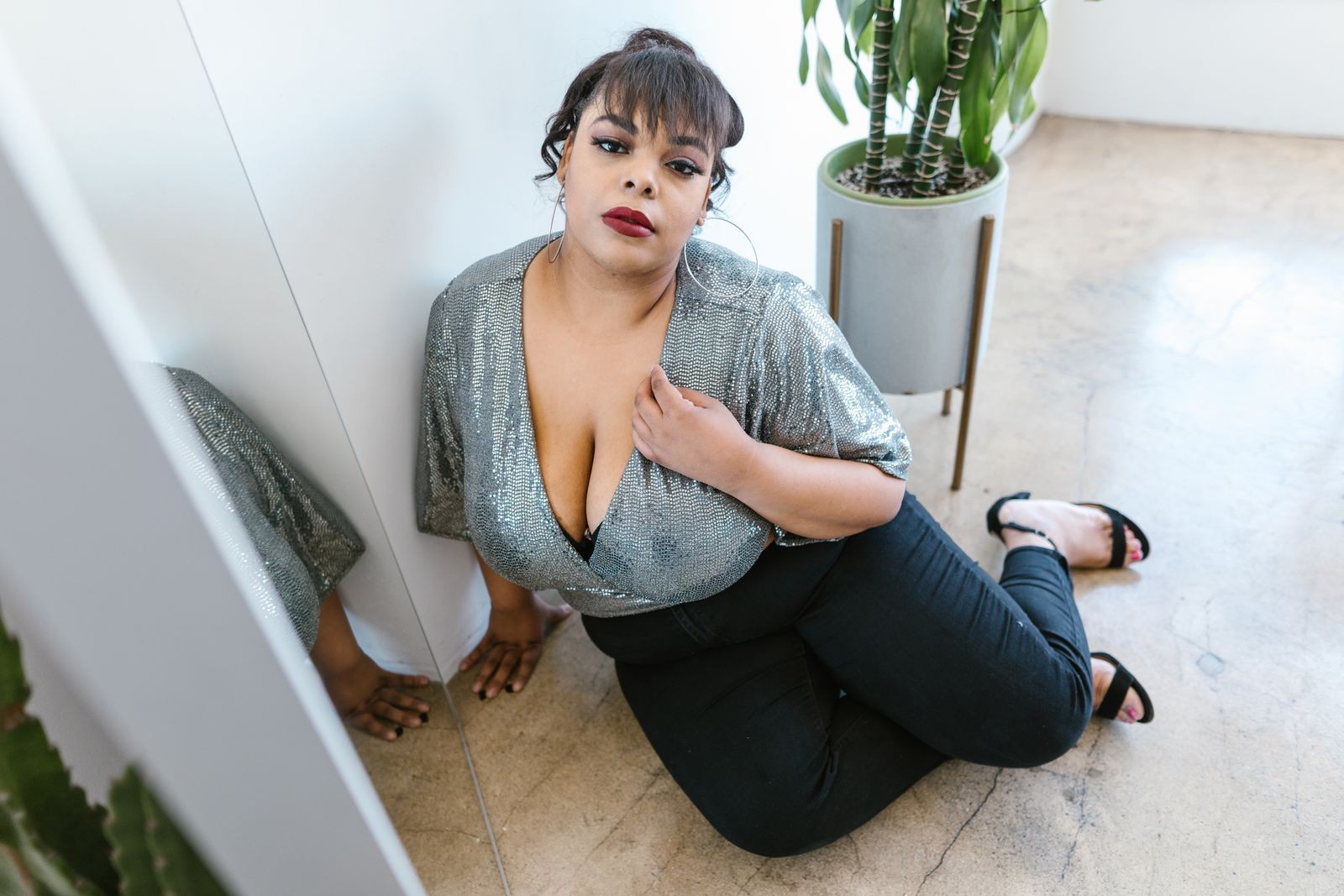
The fit rule: the waistband must fit the waist, not the hip it climbed over. The classic curvy denim failure is the waist gap: jeans that fit the hip and thigh stand away from the back waist, because they were cut for a smaller waist-to-hip difference. Curve-fit denim is engineered against exactly that, with a higher rise, a contoured waistband and more room through the hip relative to the waist. Good American builds its fit guide around that gap problem, sizing its curve fits by the difference between waist and hip measurements rather than by a single number. Judge any pair by the back view: the waistband should sit flat against your back when you sit down, with no hand needed to hold it there.
The top half of the formula does the evening work. A bodysuit is the cleanest partner for high-rise curve denim, because it removes the tuck problem entirely and draws an unbroken line from shoulder to waistband. Stitch Fix’s guide to how to wear a bodysuit covers the curvy specifics: match the bodysuit’s leg rise to the rise of your bottoms so nothing peeks or pulls, and let its seamless line make the jeans’ waistband the outfit’s waist definition. A sequinned or satin bodysuit turns the jeans dressy; a heeled boot under a straight leg keeps the leg line long. For the full step-by-step build, see our how-to on a Friday night outfit with jeans.
Denim details that decide the fit
Rise first: a high rise that reaches the natural waist is what lets this formula define anything. Fabric second: one to two percent elastane gives the give; more than that and the jeans bag at the knee and seat by midnight. Wash third: a dark, even wash reads dressier than whiskered denim, and it photographs better, a point our explainer on Friday night outfits that photograph well makes about dark, uniform tones generally. Hem last: the leg should meet the shoe cleanly.
Formula 4: The Belted Jumpsuit
The fit rule: torso length is a measurement, not a hope. A jumpsuit is one garment doing the work of two, which makes it the most comfortable formula on this list when it fits and the least forgiving when it does not. The curvy failure point is almost never the hip; it is the torso. A jumpsuit cut for a shorter rise pulls at the shoulder and the seat at the same time, and no belt can fix a garment that is too short through the body. Shop by torso fit first: the shoulder should sit without dragging, the waist seam should land at your waist, and you should be able to sit and reach without the garment negotiating back.
Once the torso is right, the belt does the defining. A wide-leg jumpsuit in a fluid crepe, belted at the natural waist, gives you a column with a break in exactly the right place: volume below, definition at the middle, and a neckline chosen for your bust. Let the shoe disappear under the hem so the leg line runs to the floor. This is the formula for nights when a dress feels like too much decision: one zip, one belt, done. It also layers under a long coat without disturbing the proportions, as in our guide to what to wear Friday night in winter.
Jumpsuit checks before the tag comes off
Sit in it. Reach in it. Check that the waist stays at your waist when you stand back up, and that the bust is contained without a safety pin. If the torso is right and only the leg is long, that is a tailor’s ten-minute job, and worth it.
Formula 5: The Monochrome Column
The fit rule: one color, several textures, no horizontal breaks. A single color from shoulder to hem removes every horizontal interruption and lets the eye read one long column, the most lengthening construction available to any body. For curves, the column works when two conditions hold. The fit must skim rather than squeeze, because a tight column outlines every under-layer edge; and the single color must be built from more than one texture, because one color in one flat fabric reads as a uniform. A matte crepe dress with a satin shoe, a ribbed knit column with a leather belt: the color unifies, the surfaces separate.
Black is the default column, and our deep dive into the all-black outfit works through its texture rules piece by piece. But the column is often stronger in a deep jewel tone, which keeps the lengthening effect while giving evening light something to play on. Define the waist inside the column with a belt in the same color family, a shade deeper or in a different finish, so the definition registers as shape rather than as a break. The failure mode to avoid is the accidental break: a contrasting shoe or bag chops the column at its end, the same leg-line mistake our diagnosis of friday night outfit mistakes flags from the troubleshooting side.
Column fit points
The column forgives nothing at the under-layer, so keep foundations seamless and check the seated view, where a skim becomes a cling. Hold the outfit to one deliberate shine point, a shoe, a bag or an earring, so the single color still gives the eye somewhere to land.
Formula 6: The Structured Bodice Dress
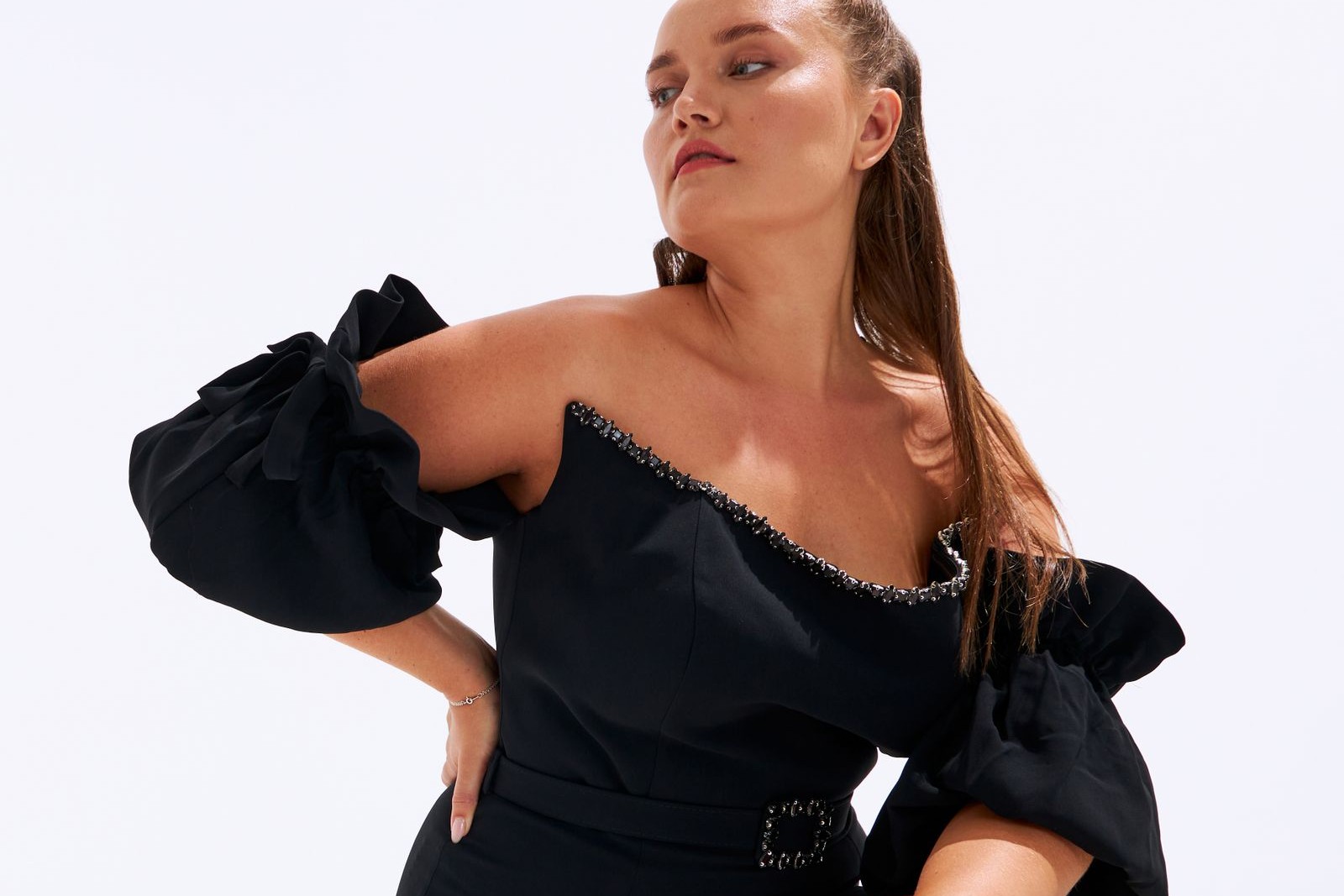
The fit rule: let the dress carry the support. A structured bodice, with cups, boning or firm seaming through the torso, is the one construction that does its own support work. The bodice shares the load with the bra: the cups shape, the seams direct, and the waist is built into the garment rather than added by a belt. For a fuller bust this is often the most comfortable dress formula of all, because nothing hangs from two thin straps. Fit the bodice to the bust first and the skirt second; taking in a skirt is simple, while a bodice that is small at the bust cannot be rescued.
Fit the bodice like a bra, because it is built like one. Bravissimo’s bra fitting guide sets out the checks that transfer directly: the firmest band should sit snug and level and carry most of the support, cups should contain without gaping or spilling, straps should rest without digging, and the center front should sit flat. Run those checks on a structured dress and you will know in a minute whether its engineering matches your body. A sweetheart or square neckline frames the bust without relying on cleavage, the construction behind many looks in our explainer on how to dress sexy without trying too hard: the confidence reads as fit, not exposure.
When structure beats stretch
Choose structure over stretch when the event involves photographs, dancing or a long seated dinner, the three situations where stretch garments migrate most. The trade is precision: a structured bodice has one right size, so shop it in person or order two sizes, and have the straps and hem adjusted to you. Those small alterations are what make a structured dress look made rather than bought.
Formula 7: The Smocked Top and Satin Skirt Set
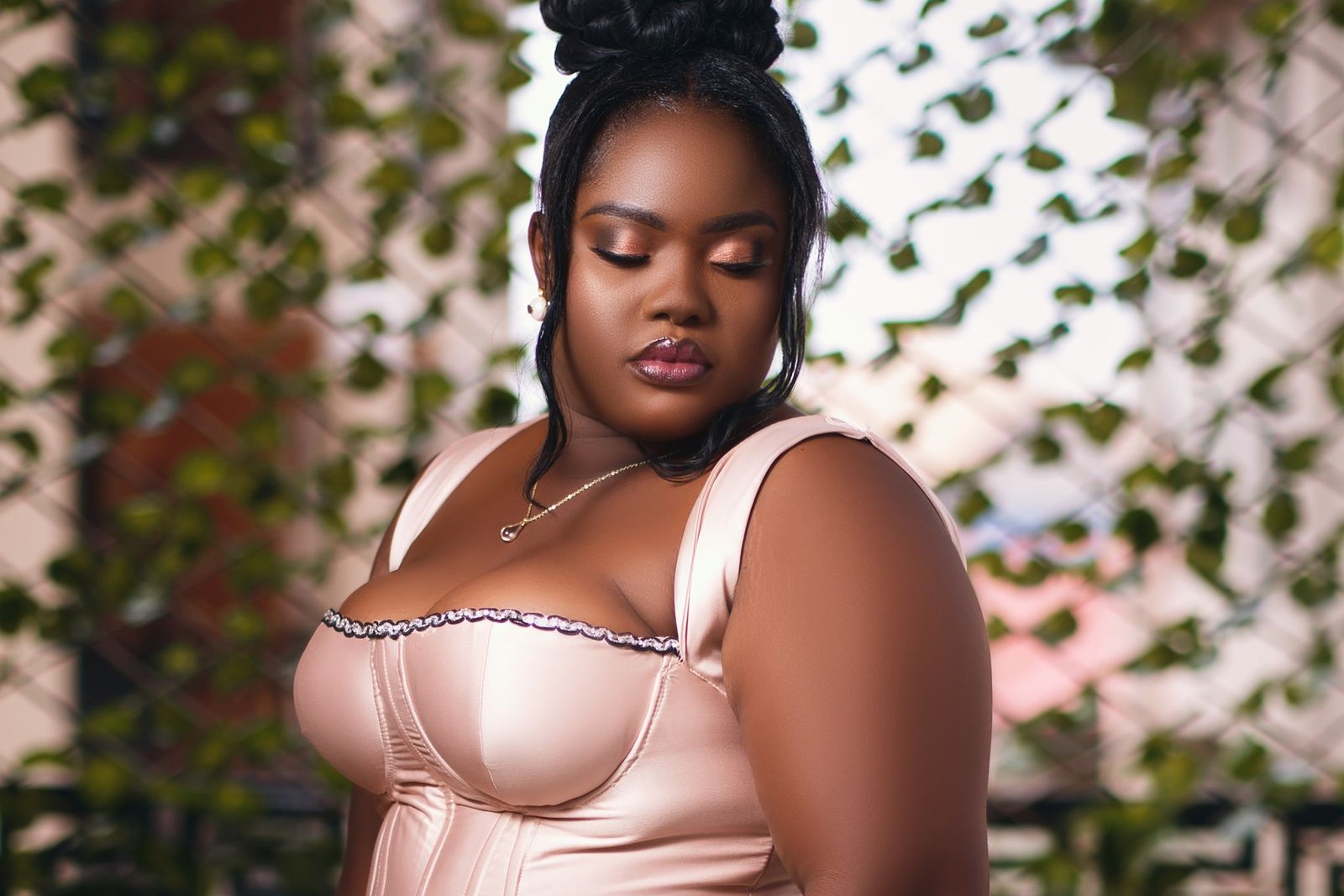
The fit rule: put the stretch where the body changes. Smocking is elastic thread sewn in rows, and it turns a bodice into a self-adjusting garment: it expands across the bust, settles at the waist and flexes after dinner, all without a zip. Paired with a satin midi skirt, a smocked top builds a two-piece that behaves like a dress and fits like separates, so each half can be bought in its own right size. That two-size freedom is the formula’s real engineering advantage for anyone whose top and bottom measurements sit in different rows of the size chart.
Build the set deliberately. The smocked top should end at the waist or be worn tucked, so the skirt’s waistband becomes the definition line; worn long and loose, the same top erases the waist it was meant to show. The skirt should skim the hip and move at the hem, in a satin with enough weight to fall straight. Color can do the print rule’s work here: a patterned top over a plain skirt places the interest at the bodice, while a plain top over a printed skirt moves it to the hem. Sets are also the budget formula on this list, because each half re-enters the wardrobe separately, a cost-per-wear logic our guide to Friday night outfits on a budget applies across a whole closet. When the evening turns cold, the set takes a cropped jacket at the waist without losing its line, one of the layering moves in our roundup of Friday night outfits for women over 40.
Smocking checks
Good smocking recovers: stretch it gently and it should spring back flat, with no loose threads or bagged rows. The top should stay in place when you raise your arms. And the skirt’s waistband should sit at the same point the top ends, because a gap at the middle breaks the dress illusion the set is built on. When all three hold, this is the most forgiving formula here, and the fastest to assemble under time pressure, a virtue our guide to last-minute Friday night outfits prizes above almost everything else.

Our view
Curves are not a styling problem to be solved with the right silhouette; they are a set of measurements that good construction respects and bad construction ignores. In our experience, the women who look effortlessly put together on a Friday night are not the ones who found a magic dress shape. They are the ones who learned their three measurements, stopped forgiving waist gaps and migrating bodices, and started treating support and fabric as part of the outfit. Learn the four rules and every corner of your own wardrobe gets easier to read.
— Friday Night Style
Frequently Asked Questions
How do I find my natural waist if my torso is soft?
Bend slightly to one side and find the crease that forms: that crease is your natural waist, whatever the tape says about the front. Measure there, comfortably loose, and place ties, belts and waist seams at that height. On most curvy bodies it sits higher than ready-to-wear expects, which is why so many fixed waistbands land in the wrong place.
Is a wrap dress really right for every curvy body?
The wrap is the most adjustable construction, but it is not automatic. It works when the tie lands at your natural waist, the crossover stays closed when you sit, and the skirt releases from the waist instead of gripping the hip. A wrap that fails those checks is the wrong wrap, not proof that wraps are wrong for you.
What if my bust and hips are different sizes?
Buy separates and two-piece formulas, like Formula 7, where each half has its own size. Buy one-piece garments for the larger measurement, then have the smaller area taken in. A dress fitted to the bust and eased at the waist is a simple alteration; a dress that is small at the bust cannot be fixed.
How much stretch should a curvy outfit have?
Enough to sit, reach and twist without the garment shifting, and no more. In denim, one to two percent elastane is the working range; beyond that, knees and seats bag by midnight. In dresses, look for structure with stretch, ponte, scuba or stretch crepe, rather than a thin jersey that clings. If the garment returns to shape after you sit and stand, the balance is right.
Can I wear a slip dress with a larger bust?
Yes, with the support solved first and structure added outside. Choose a slip with adjustable, wider straps or a neckline that works with a real bra, fit the bra by its band, and add a tailored layer that frames the top half. The slip provides the fluid line; the layer provides the architecture.
Questions About Friday Night Outfits for Curvy Women?
Tell us the plan, the dress code, and the part of the outfit that is not working — we read every message.
Sources
- Universal Standard — Sizing Guide: Finding Your Perfect Plus Size Workwear Fit
- Stitch Fix — Plus Size Fashion Tips and Advice
- ASOS — Finding the Right Size
- The Curvy Fashionista — The Rule of Thirds in Fashion
- Nordstrom — Plus-Size Style Guide
- SPANX — Size Guide
- The Curvy Fashionista — Date Night Outfit Ideas for Curvy Women
- Lane Bryant Cacique — Bra Fit Guide
- 40+ Style — How to Mix Textures in Your Outfits
- Good American — Fit Guide
- Stitch Fix — How to Wear a Bodysuit
- Bravissimo — Bra Fitting Guide